
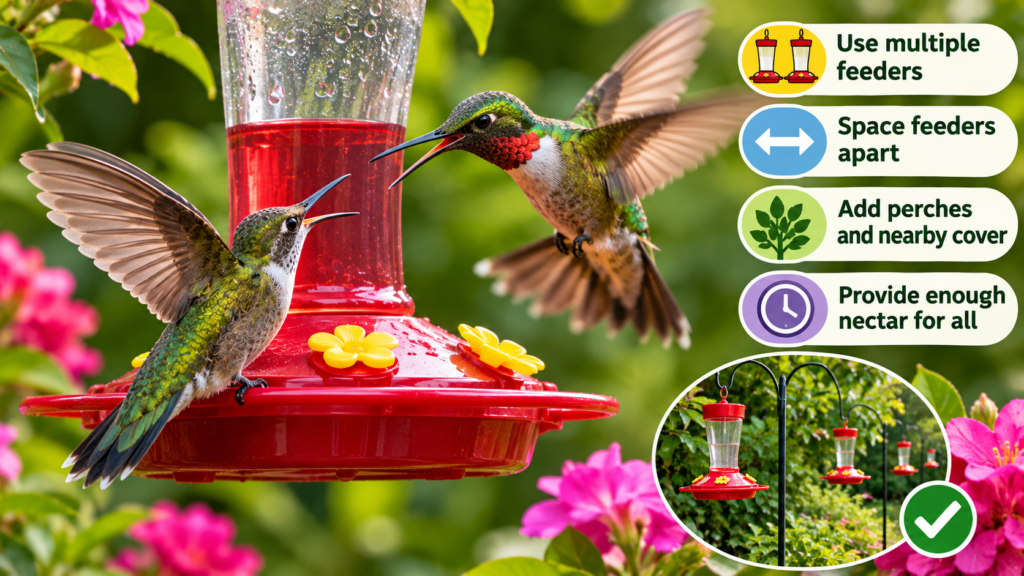
Learning how to stop hummingbird territorial fighting feeders is a vital skill for any enthusiast seeking to cultivate a balanced and hospitable environment in their backyard. It can be incredibly frustrating to observe a single, particularly aggressive hummingbird patrolling a nectar station and relentlessly dive-bombing or chasing away every other bird that attempts to land. However, it is essential to recognize that this behavior is not a sign of a failing habitat or a problem with your nectar recipe. Rather, it is a manifestation of an deeply ingrained biological imperative that has evolved over thousands of years to ensure individual survival.
By viewing these territorial displays through an ecological lens, homeowners can shift their perspective from frustration to active management. Hummingbird behavior is highly predictable once you understand the underlying triggers related to food security and seasonal cycles. Through the application of specific spatial tactics, visual obstructions, and landscape improvements, you can mitigate the dominance of individual bullies and create a more equitable feeding space for the diverse hummingbird population in your area. This guide provides actionable, evidence-based steps to foster peace and increase visitor variety at your nectar stations throughout the seasons.
Why Do Hummingbirds Fight Over Feeders?
Hummingbird aggression is primarily driven by their biological need to protect vital energy sources. In their natural habitats, nectar is often a scarce or patchy resource, and hummingbirds have evolved to defend specific flower patches with intense territoriality. When these birds encounter an artificial sugar-water feeder in your yard, they frequently apply this same possessive instinct to the feeder, viewing it as a personal resource that must be guarded against any perceived intruders. This behavior is not restricted to males; while males are famously known for their territorial guarding, female hummingbirds also exhibit strong aggressive behaviors. Females frequently defend their own localized territories from other females, particularly when those food sources are in close proximity to their nesting sites.
Observers of backyard birds will recognize the standard “vocabulary” of aggression, which includes persistent warning calls and sharp, rhythmic chirping. When these vocalizations are ignored by another bird, the dominant individual will often escalate to physical displays, such as high-speed chasing or dramatic dive-bombing. It is useful to remember that the intensity of this territorial defense varies significantly by season. You will typically notice that hummingbirds are at their most combative during the summer nesting season, when they are highly invested in maintaining their specific territories to support reproductive activities. Conversely, during periods of peak migration, these dynamics can shift; birds focused on long-distance travel often show higher levels of tolerance for one another at high-resource feeding sites, prioritizing mass refueling over the defense of a fixed territory.
It is important to acknowledge that this defensive behavior, while disruptive to the observer, is a standard survival strategy. Male hummingbirds are inherently territorial, particularly when they establish a specific feeding zone to attract mates or sustain their high metabolic demands. This territorial instinct is often triggered by the presence of other hummingbirds, leading to a cascade of behaviors ranging from vocal warnings to physical combat. Female hummingbirds are also active participants in these territorial displays, especially when they are protecting food resources in proximity to their nesting sites to ensure their offspring have sufficient nourishment. Understanding that this aggression is not a sign of poor feeder maintenance but rather a natural response to perceived threats is crucial for any enthusiast. Furthermore, the intensity of these disputes is rarely static. Because the intensity of territorial defense varies significantly by season, you may find that the level of competition at your feeders changes throughout the year. During peak migration, for instance, the necessity of rapid refueling can sometimes lead to a temporary decrease in territoriality as birds prioritize their energy needs over strict defense, whereas the height of the breeding season usually marks the period of most intense conflict.
Tactics to Reduce Territorial Dominance
If you find that a single bird is effectively monopolizing your entire feeding setup, the most direct solution is to alter the physical geography of your feeding stations. The most effective way to break a bird’s hold on your yard is to interrupt its line of sight. Hummingbirds generally only defend what they can see and survey from a preferred perch. If a bird cannot monitor multiple feeders from a single vantage point, it is much less likely to attempt to defend them all simultaneously. You can achieve this by placing feeders on opposite sides of your house, around corners, or behind large trees, bushes, or garden structures that obscure the view between the stations.
If your yard size or layout limits your ability to place feeders far apart, consider a counterintuitive approach: use the power of volume. You can effectively “overwhelm” a single defender by grouping several feeders together in a tight cluster of two to three units. When you create a dense feeding hub, the sheer number of incoming birds often makes it physically impossible for a single, small hummingbird to manage the traffic. The dominant bird will eventually exhaust its energy reserves while attempting to chase away a constant stream of visitors, often leading to a state where it simply stops fighting and shares the resource. For those who prefer to keep their stations separate, aim for a minimum distance of 10 to 15 feet between each feeder to minimize the scope of direct confrontations.
When addressing the issue of a single bird dominating multiple feeders, the primary goal is to disrupt the bird’s ability to maintain a clear line of sight over its claimed territory. Strategic feeder placement is the most effective tool at your disposal to achieve this. By utilizing visual barriers, such as trees, shrubs, or structural elements of your home, you can effectively segment your yard into zones that are impossible for one bird to patrol simultaneously. If your environment allows, increasing the physical distance between your nectar stations is highly recommended; a buffer of 10 to 15 feet is often sufficient to delineate separate territories for different birds. If conflicts persist even after initial adjustments, increasing the distance between units further can help decrease the frequency of successful raids by the dominant individual. Conversely, if your space is limited, you can utilize the power of volume by grouping two to three feeders in a tight cluster. This configuration can overwhelm a would-be defender, as it becomes physically exhausting to ward off the sheer volume of birds visiting the clustered stations, often forcing the bully to abandon its defensive post in favor of peaceful feeding. This approach is best applied conditionally based on the total number of hummingbirds frequenting your area and your yard’s specific layout.
Using Visual Barriers and Habitat Supplements
Beyond simply rearranging your hardware, you can improve the quality of your yard by integrating broader habitat solutions that naturally dampen competition. Think of your yard as a comprehensive feeding ecosystem rather than a collection of points. By introducing native, nectar-rich plantings, you provide hummingbirds with reliable, natural food sources that serve as a crucial pressure valve. Choosing plants that feature tubular red or orange flowers is particularly effective, as these are highly attractive to hummingbirds and allow multiple birds to feed in a more dispersed, natural pattern that is harder for a single bully to patrol.
Developing a layered landscape is another essential strategy. Using tall shrubs, vines on a trellis, or dense ornamental grasses creates “zones” within your yard. This added complexity breaks up the open flight paths that aggressive hummingbirds use to spot rivals, and it provides numerous hiding places for more timid birds to retreat when a territorial dispute breaks out. A well-designed, diverse landscape makes it far more difficult for one bird to maintain total surveillance of the environment. For deeper insights into how these strategies integrate into a larger, year-round care plan, refer to Hummingbirds in Your Yard: Feeding, Identification, Safety, and Seasonal Care, which serves as a guide for building a truly sustainable habitat for your local hummingbird population.
Creating a More Equitable Feeding Environment
Effectively managing your hummingbird feeders is rarely a one-size-fits-all endeavor; it is almost always a process of trial and error. Because every backyard has a unique layout and a changing roster of avian visitors, the specific placement of your feeders may require periodic adjustment. Start by dedicating time to simply observe the flight paths and favored perching spots of the most dominant individuals in your yard. Once you have identified where they spend the majority of their time, you can strategically introduce visual barriers or adjust your feeder locations to disrupt their “patrol” routes, effectively creating new, unmonitored zones.
Keep in mind that some individual birds are naturally predisposed to be more aggressive than others, and even with the most thoughtful placement, you may still witness occasional squabbles. This is a normal, healthy part of their behavior. By diversifying your approach—utilizing a combination of clustered feeder stations for higher volume, dispersed feeders for shy birds, and high-quality native plantings—you create a resilient landscape that supports a greater variety of birds. Patience is your most important tool; as you continue to modify your yard to better mirror the natural spacing and variety of wild environments, you will likely discover that your feeder activity becomes more varied, less stressful for the birds, and significantly more enjoyable for you.
Frequently asked questions about managing hummingbird aggression
Why does one hummingbird chase all the others away?
Male hummingbirds are naturally territorial at feeding sites as a survival instinct designed to protect finite food sources. They use aggressive displays like dive-bombing and persistent chasing to maintain control over what they perceive as their personal supply of nectar.
Does this aggressive behavior ever stop?
The intensity of territorial defense fluctuates based on the time of year. Hummingbirds are typically most combative during the summer nesting season and tend to become more tolerant and communal during migration periods when their biological focus shifts to fuel consumption for travel.
How far apart should I place my feeders?
To prevent one bird from dominating multiple stations, you should space your feeders at least 10 to 15 feet apart. If you have enough yard space, moving them entirely out of one another’s line of sight is even more effective for reducing conflict.
Are females just as aggressive as males?
Yes, females also exhibit territorial behavior. They will protect their own nesting territories from other females and can be just as fierce as males in guarding food sources that are located near their nests.
Sources consulted
- Are Hummingbirds Territorial at Feeders and Flowers?
- How to Attract Hummingbirds: The Complete Guide to Creating a Hummingbird Haven
Research data as of 2026-11-10 on Feather Yard Guide.


Get new guides by email
A weekly roundup when new guides are published. No daily emails.
Email confirmation required. Privacy Policy