
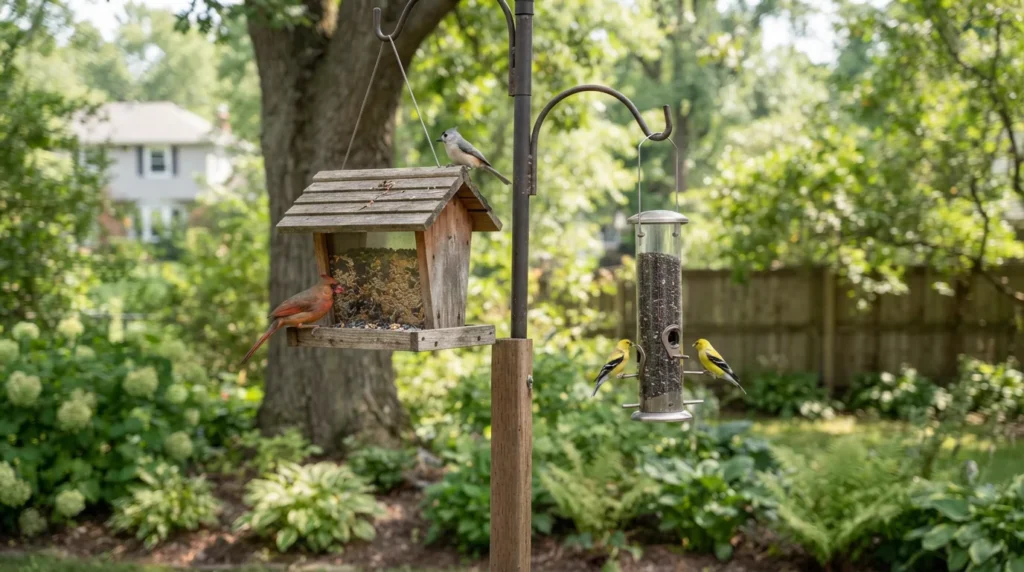
Performing a tube feeder vs hopper feeder comparison is essential for any backyard enthusiast looking to establish a successful feeding station. Beginner birders frequently struggle to determine which feeder style best suits their yard size, local bird species, and seed preferences without wasting money on improper hardware. By understanding the functional differences, maintenance requirements, and target audiences of these two popular designs, you can make informed, responsible choices for your local wildlife.
When exploring options through Bird Feeders and Accessories: How to Choose, Place, and Maintain the Right Setup, it becomes clear that hardware selection directly influences which birds visit and how much effort you must dedicate to yard upkeep. Both hopper and tube styles serve specific roles, offering distinct balances between seed protection, capacity, and pest deterrence that cater to different environmental conditions.
Understanding Hopper Feeders: Capacity and Design
Hopper feeders, often referred to as house feeders, are defined by their enclosed seed bin and a feeding tray that provides an accessible landing spot for birds. This configuration is particularly effective at allowing birds to feed from both sides simultaneously, which can reduce crowding among visiting species. One of the most significant advantages of this style is its generous capacity; these feeders hold enough seed to last for several days, which is a convenient feature for those who prefer less frequent refilling routines.
Beyond their capacity, hopper feeders incorporate a protective roof structure. This design is not merely aesthetic; the roof serves a functional purpose by keeping seed dry and fresh during periods of precipitation. These units see a marked increase in activity during the fall and winter months. As natural food sources like wild berries and insects become increasingly scarce in late October and November, birds shift their reliance toward available feeders, making the hopper style a reliable staple during these peak months.
Understanding Tube Feeders: Protection and Sizing
Tube feeders represent a different engineering approach, utilizing cylindrical containers that excel at protecting seed from the elements. By shielding the food supply within a tube, these feeders effectively guard against spoilage caused by rain and humidity. A major health advantage of the tube design is its lack of a broad platform; because birds do not congregate on a tray, they are less likely to foul the remaining seeds inside with their droppings, which contributes to a more hygienic feeding experience.
Furthermore, the versatility of tube feeders lies in their customizability. These feeders can be manufactured with specific port spacing and perch configurations to target particular groups of birds. Whether you aim to provide tiny nyjer seeds for goldfinches or offer large unshelled peanuts for jays and woodpeckers, the tube style can be sized appropriately. This adaptability allows you to select a feeder that specifically meets the needs of the bird species common to your region.
Target Bird Species: What Each Feeder Attracts
Hopper feeders are highly effective at attracting a wide variety of larger and medium-sized feeder birds. Because of their stable platform design, they are a favorite among species such as cardinals, chickadees, finches, juncos, doves, Blue Jays, buntings, grosbeaks, sparrows, and titmice. The tray creates an inviting environment for these birds, as it allows them to land easily and access the seeds with minimal effort.
Tube feeders, however, use their unique port and perch structure to filter the types of birds that can effectively feed. By limiting landing space and managing access to the seed, you can intentionally target smaller, more agile birds. While some tube designs are universal, others are specifically crafted to exclude larger, more dominant birds, allowing smaller songbirds to access food without being driven off by heavier, aggressive visitors.
Pest Resistance and Squirrel Management
Managing pests is a reality for any backyard birder, and squirrel management is a critical factor when choosing between these styles. Hopper feeders are unfortunately highly vulnerable to squirrel raids. Because their stable wooden or plastic platforms provide excellent footing for squirrels, these feeders are often the first targets in a yard. To mitigate this risk, it is recommended to use a pole-mounted hopper, as these can be outfitted with a metal squirrel baffle placed away from nearby jump points, making the feeder much more difficult for squirrels to access.
Plastic tube feeders present a different challenge. While they may deter small birds or specific pests via port design, squirrels can cause significant damage to the plastic itself. They often gnaw around the feeding ports, widening the openings to gain easier access to the seed. Metal tube feeders offer superior resistance to this type of damage. Regardless of the style chosen, installing a baffle on your supporting pole or hanging rope is the most effective way to prevent pests from raiding your supply.
Seed Selection, Cleaning, and Hygiene Requirements
Maintaining a clean feeding environment is vital to prevent the spread of disease. Because tube feeders involve multiple birds visiting the same perches, they require regular cleaning with a dilute bleach solution. Hopper feeders require a similar maintenance schedule; their trays can accumulate moisture, wet seed, and hulls that compact over time. If not cleaned every one to two weeks using a 10% bleach solution or water mixed with white vinegar, this debris can harbor mold and lead to sanitation issues.
Your seed choice significantly influences how much waste is generated and how much maintenance the feeder requires:
- Black Oil Sunflower Seed: This is widely considered the top food choice for hopper feeders. Its thin shell is easy for cardinals, chickadees, and finches to open, providing high-calorie nutrition that these birds rely on.
- Safflower Seed: This serves as a strong secondary option. Many squirrels and House Sparrows actively avoid it, which can help reduce competition at a busy feeder while still providing a favorite snack for cardinals.
- Avoid Cheap Mixed Seed: Using low-cost mixes that rely on fillers like milo, wheat, or red millet is a common mistake. Birds will typically sort through these mixtures, discarding the undesirable grains onto the tray where they accumulate moisture, compact, and mold.
Optimal Placement Guidelines for Backyard Feeders
Proper placement enhances the safety and visibility of your feeders. For hopper feeders, experts suggest positioning them 5 to 10 feet away from protective cover, such as shrubs or a fence line. This distance provides a safe staging area where birds can observe the surroundings before approaching the feeder. Furthermore, keeping the feeder at a height of 4 to 6 feet off the ground keeps it accessible for your viewing pleasure while reducing the likelihood of successful direct cat threats.
Frequently asked questions about tube and hopper feeders
Which feeder is better at keeping seeds dry?
Both styles are effective, but they achieve this differently. Hopper feeders utilize a roof structure to protect the tray, while tube feeders use a covered cylindrical design to fully enclose the seeds from environmental moisture.
How often should bird feeders be cleaned?
Cleaning should be a routine habit. Hopper feeder trays should be cleaned every one to two weeks to prevent mold growth from accumulated hulls and wet seed, while tube feeders require regular washing with a dilute bleach solution to maintain bird health.
How can I stop squirrels from raiding my feeder?
Installing a squirrel baffle on the support pole or hanging wire is the best defense for both types of feeders. For hopper feeders, a pole-mounted setup with a metal baffle placed away from trees or fences is the most robust solution.
What seed types work best to avoid waste?
High-calorie seeds such as black oil sunflower are highly preferred by birds and lead to less waste. Avoiding inexpensive filler seeds prevents the scattering of unwanted items onto your feeder tray where they can cause sanitation issues.
Making the Right Choice for Your Backyard
Choosing between a tube feeder and a hopper feeder is a decision driven by your yard goals, your local bird species, and the time you can dedicate to maintenance. Hopper feeders are excellent for accommodating a larger volume of seed and supporting a diverse group of medium-sized birds, provided you manage their vulnerability to squirrels and prioritize tray cleanliness. Tube feeders provide superior protection against the elements and allow for a more targeted feeding experience through specific perch configurations. By matching your feeder selection with proper placement, effective baffling, and high-quality seeds, you create a sustainable and rewarding environment for the birds in your area.
Sources consulted
- How to Choose the Right Kind of Bird Feeder | All About Birds
- Hopper Bird Feeders: Benefits, Birds & How to Use Them Birdbrella
Feather Yard Guide research update of November 26, 2026.
Get new guides by email
A weekly roundup when new guides are published. No daily emails.
Email confirmation required. Privacy Policy