
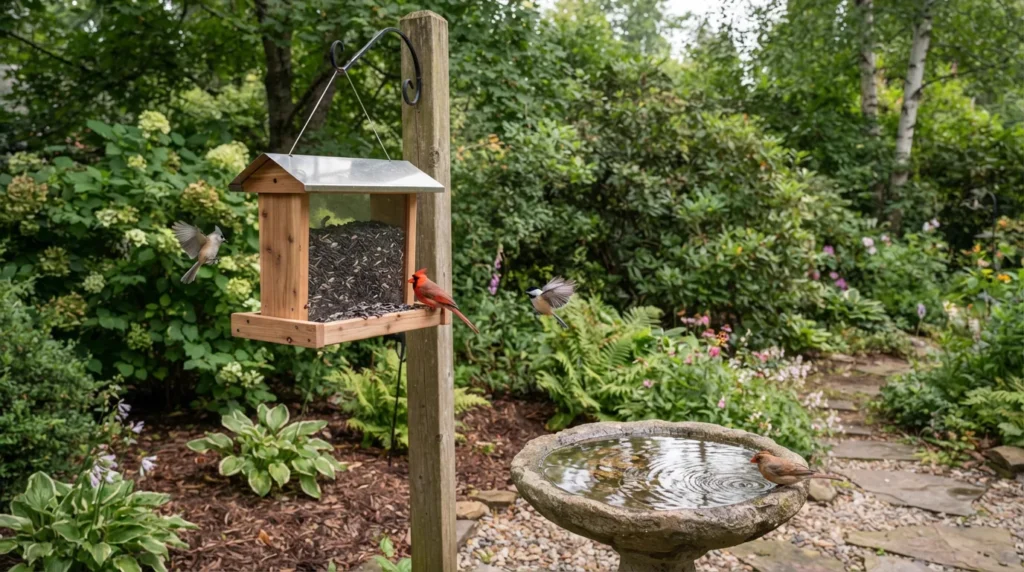
Backyard Bird Feeding and Seeds: How to Feed Wild Birds Responsibly is a rewarding activity that connects homeowners with local wildlife, provided it is approached with proper care and cleanliness. Establishing an inviting space requires balancing food availability with strict hygiene and safety routines to protect visiting animals.
Attracting a diverse array of species to your property involves understanding their natural preferences, seasonal feeding habits, and the common hazards that can impact wild populations. By implementing structured maintenance schedules and safe placement habits, you can enjoy bird watching while supporting local ecosystems responsibly.
Choose a setup: Use the free Bird Food & Feeder Finder to explore feeder and seed options, with important considerations for cleaning and bird safety.
Essential Elements for Attracting Backyard Birds
To attract the greatest variety of birds, provide three essential elements: the right variety of quality seed, fresh water, and ample cover. Keeping birds coming back to your yard depends on maintaining this balanced combination.
Different bird species feed at different vertical levels across a landscape. For instance, ground-feeding birds like sparrows, juncos, and towhees prefer areas near the dirt, while finches and cardinals frequently feed in shrubs. Meanwhile, chickadees, titmice, and woodpeckers typically look for food higher up in trees.
Selecting the Best Seeds and Food Options
Offering a diverse mix of seeds helps attract more species to your yard while minimizing waste. Among all options, black-oil sunflower seed appeals to the greatest number of birds and serves as a reliable staple for most backyard setups.
While seed is popular year-round, timing matters for other foods. Suet should be provided during cool weather only to prevent rancidity and feather damage. Beef fat can turn rancid quickly in hot weather and drip onto feathers, which can ruin the natural waterproofing birds rely on.
Feeder Hygiene and Disease Prevention
Bird feeders can facilitate the spread of diseases among wild birds. Attracting birds to a yard creates an environment where they concentrate and mix in ways rare in the wild, making it easier for illnesses like avian flu to spread.
To keep populations healthy, seed and suet feeders should be cleaned every other week as a baseline. Cleaning should occur before spotting a problem, with every other week as a good starting point, and more frequently in hot and humid weather. Hummingbird feeders require more frequent cleaning than seed feeders because sugar solutions act as a petri dish for bacteria and need to be emptied and cleaned every few days, or even more often when it is warm outside.
When preparing hummingbird nectar, the solution should be made of one part white sugar to four parts water, boiled briefly, and feeders must be washed every few days with very hot water to prevent mold. Similarly, birdbaths require frequent attention and should have their water replaced daily or every other day to prevent mosquitoes, algae, and bacterial growth.
After washing any feeder or bath, equipment must be completely dried before refilling with food or water. Leaving moisture inside a feeder is a sure way for fungus or bacteria to flourish. If sick or dead birds are observed in your yard, take feeders down immediately, drain baths for a few days, and report the sighting to your local state wildlife agency.
Protecting Backyard Birds from Common Hazards
Backyard setups must account for structural and predatory threats. Approximately one billion birds die each year in the United States from flying into windows. To mitigate this risk, feeders and birdbaths should be placed either very close to windows (within 3 feet) or at least 30 feet away. At in-between distances, reflections cause confusion and birds have room to pick up speed before striking windows, leading to deadly collisions.
Predators also pose a severe threat. Outdoor and free-roaming cats kill hundreds of millions of birds annually in the United States, particularly targeting ground-feeding birds and those dazed by window collisions. To help birds escape potential predators, place feeders and baths out of direct sunlight and where they stay dry, preferably near brush that offers a quick escape route. Note that birdbaths should not be placed directly under feeders.
How to Properly Store Birdseed
Proper storage protects the nutritional value of your supplies and keeps unwanted pests away. Birdseed should be stored in secure metal containers in a cool, dry location. Using metal garbage cans protects seed from mice and squirrels, while avoiding heat and dampness prevents mold growth and nutritional loss.
Frequently asked questions about backyard bird feeding
Does feeding birds prevent them from migrating in the winter?
Seasonal changes in day length determine when birds migrate, rather than food abundance. Migration timing is driven by seasonal shifts in the length of days, starting in fall as days shorten while natural food is still abundant.
When is bird feeding most beneficial?
Bird feeding provides the most benefit during winter when natural food supplies are scarce. Additional species also visit yards during spring and fall migrations and summer nesting seasons.
How should hummingbird nectar be prepared?
Hummingbird nectar must be made from one part white sugar to four parts water. Boil the mixture briefly to sterilize it, avoid adding red food coloring, and clean the feeder every few days.
Final Thoughts on Responsible Bird Feeding
Responsible backyard bird feeding hinges on a commitment to cleanliness, safe placement, and proper nutrition. By maintaining rigorous cleaning schedules for feeders and water sources, selecting high-quality seeds like black-oil sunflower, and protecting birds from window collisions and outdoor pets, you can create a safe haven for local wildlife. Always monitor your yard for signs of illness, store your supplies securely in metal containers, and adjust your offerings based on seasonal changes to support healthy bird populations year-round.
Sources consulted
- How to Feed Birds Safely This Winter | Audubon
- Audubon Guide to Bird Feeding
- 11 Tips for Feeding Backyard Birds | Audubon
Research governance data: 2026-10-17T20:02:44.2+00:00 — Feather Yard Guide
Veja também
- How to Feed Backyard Birds Safely: A Beginner’s Guide
- What Not to Feed Wild Birds: Common Mistakes
- Best Bird Seed for Backyard Birds: What to Offer
- Backyard Bird Identification Guide for Beginners
Get new guides by email
A weekly roundup when new guides are published. No daily emails.
Email confirmation required. Privacy Policy